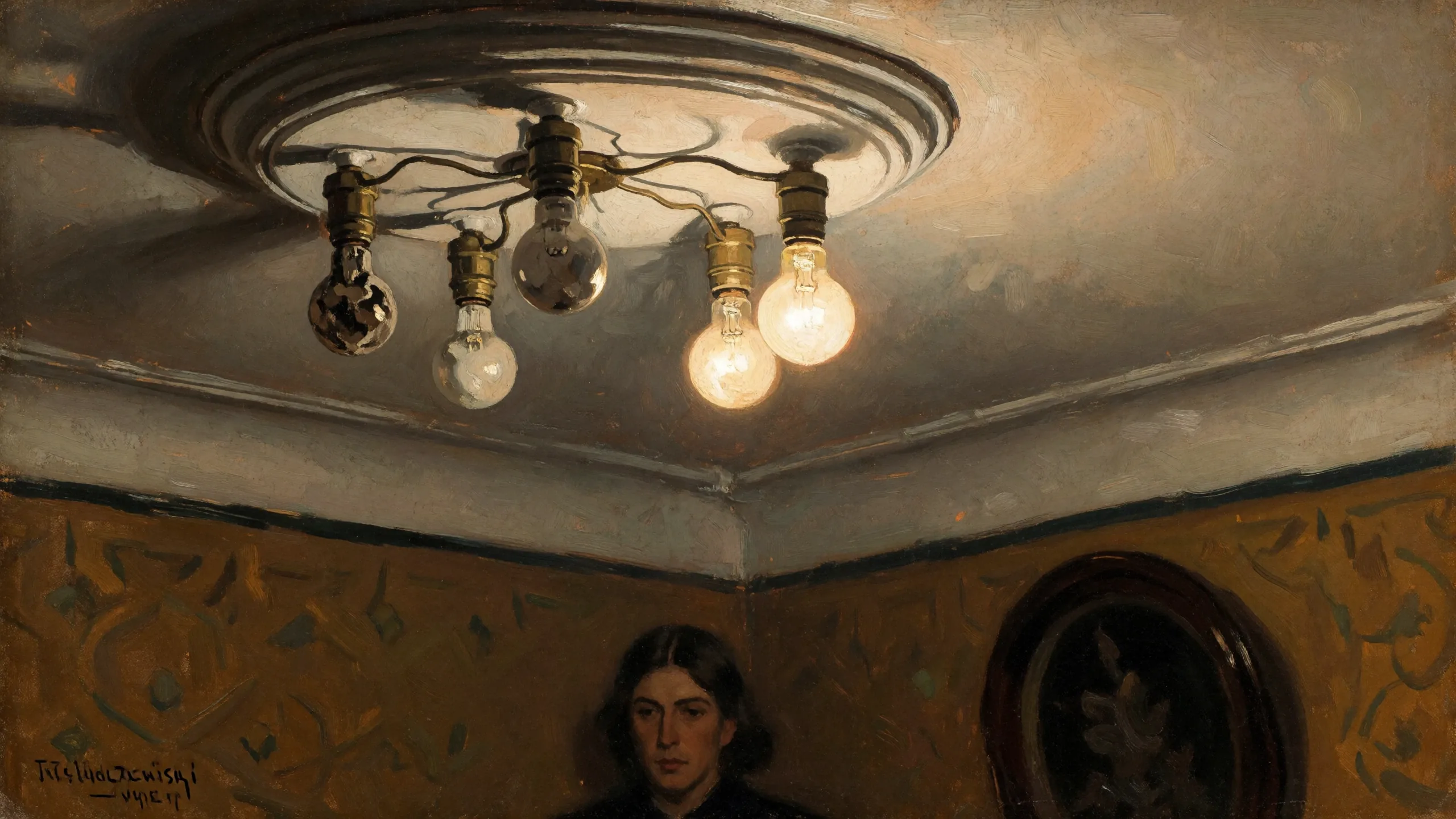
W Dobie Pierwszej Sixpensówki
In the wee small hours of sixpence
And the lighted chandelier
Stands a rusty old retainer
Whose old eyes are filled with tears
For his master, good sir Galant,
Who is now off to the wars
And although his eyes are crying
We know grief is not the cause
W dobie pierwszej sixpensówki
I świecznika z żarówkami
Stał, sterany, stary sługa
Oczy mu podeszły łzami
Gdyż pan jego, cny sir Galant
Szedł na wojnę, tego dnia
Lecz choć sługa stał we łzach
Wiemy, że nim nie wiódł żal
And if grief is not the reason
He must be of sterner stuff
And his sword though old and rusty
Must be blunt as sharp enough
A gdy żal to żaden powód
Żeby męstwa się tu zrzec
To, choć brzeszczot rdzą stępiony
Wciąż był ostry jego miecz
In the wee small hours of sixpence
And the broken window pane
Stand the remnants of the evening
Who are waiting all in vain
For the crowing of the cockerel
Showing morning is not night
But the air is filled with silence
And the daylight is not bright
W dobie pierwszej sixpesnówki
I wybitej w oknie szyby
Stoją, próżno na coś licząc
Godzin zmierzchu niedobitki
Kogut pieje im na dowód
Że to ranek jest, nie - noc
Chociaż głucha cisza wokół
A dniem nadal rządzi mrok
But still darkness is no reason
We are men of sterner stuff
And our swords though old and rusty
Still are blunt as sharp enough.
Ale ciemność, to nie powód
Żeby męstwa tu się zrzec
Więc choć brzeszczot rdzą stępiony
Dość jest ostry wciąż nasz miecz
In the wee small hours of sixpence
And the hat-stand in the hall
Waiting only for the morning
Shadows flitting 'cross the wall
And perhaps that old retainer
Whom now giving of his all
May have once been just as we are
And now has no face at all.
W dobie pierwszwej sixpesnówki
I stojaka na kapelusz
Ścienne się rozsiadły cienie
Wyczekując rannych zórz
Wróćmy do starego sługi
To co jego, mu oddajmy
Czy nie takim był, jak my, on
A dziś nikt tej nie zna twarzy
But still grief was not the reason
He was made of sterner stuff
And his sword though old and rusty
Still was blunt as sharp enough.
Wszakże żal to nie był powód
Żeby męstwa miał się zrzec
Wciąż, choć brzeszczot rdzą stępiony
Dość był ostry jego miecz